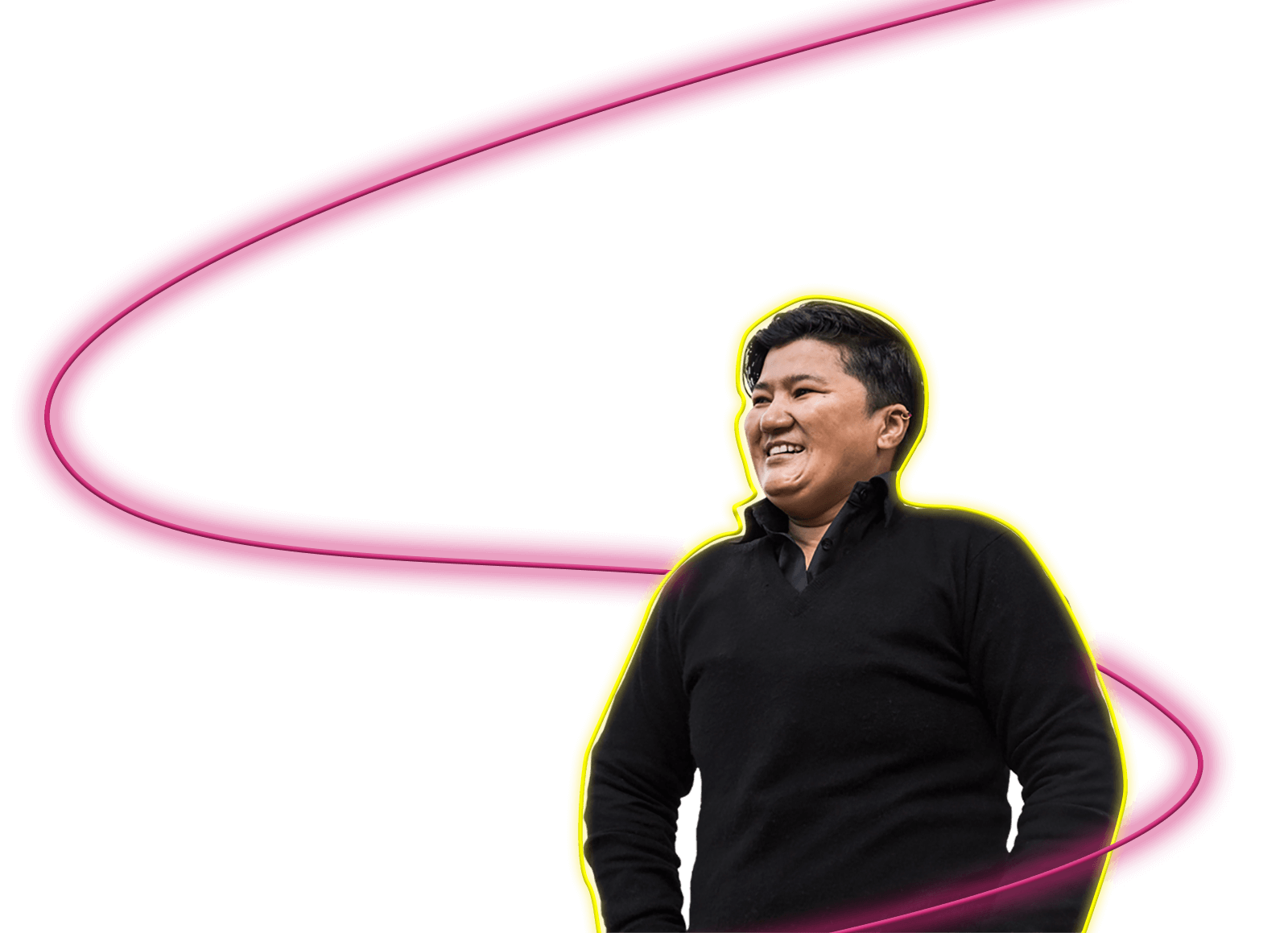
“When I was 14 years old I discovered that I belong to the LGBT community, but I didn’t know anyone from the community, so I felt very alone. I used to question myself, “I’m a girl, why do I like girls?” My parents used to put pressure on me saying things like “Why are you like this?” “Why do you like girls?” “Why don’t you just be straight?”
“I started to work for a printing studio job and there I meet a girl who I was attracted to and we got close. Her name is Meera, I was 14 at the time. We started to get really close, so close that people used to call us sisters. But then slowly the relationship changed and we realised that we were not sisters, we were more than sisters, we were like a couple. Soon Meera’s family started to question and blame me, saying “You are manipulating our daughter to be attracted to you.” They wanted to break us up.
Meera and I ran away but shortly after my father and Meera’s parents found us. My father started to beat me very badly, he spat on me like I was garbage. They arranged for a meeting between the families and told us that we could no longer be together. Meera pleaded with her family to let us be together, even saying she would die if we couldn’t be together. But Meera’s family wouldn’t listen and instead started to beat her, it was so bad that I had to beg them to stop. Meera’s family even tried to have me arrested, accusing me of trafficking Meera.
Meera found it really hard to be separated from me. She became suicidal and poisoned herself. She was found unconscious by a neighbour and was hospitalised. She spent 13 days in a coma.
After all that we had experienced we thought about running away and leaving Nepal so we could be together, but inside we knew that if we were going through this there must be others like us going through much worse. So instead we decided to stay in Nepal and set up a support group for other lesbian women – Mitini Nepal.
We were the only organisation that supported lesbians in Nepal, and we did this even when it was difficult or dangerous. In 2011 we supported Rajani Shahi and Prem Kumari Nepali in what went on to become a landmark case for lesbian rights. After threats from Rajani’s husband and his family they came to Mitini Nepal seeking refuge. Rajani’s family then came and attacked the office and tried to destroy the building by setting fire to it. They also threatened me personally, I was receiving rape and death threats from them. It became so bad that I went into hiding for 13 days.
When I got the rape and death threats I didn’t think from my mind, I thought from my heart, I just wanted to keep them together. I felt the injustice, if they were a heterosexual people who wanted to live together they would have been given permission, they would be respected. Lesbians deserve the same respect.
Rajani and Prem took their case to the Supreme Court and became the first lesbian couple to win the right to live with their partner.
“I was so happy when they won the case, I knew that it was an important step for lesbian rights.”
Since then society’s attitude to lesbian women has begun to improve. Women now have permission to live together in homosexual relationships. There is now an option to self-identify as lesbian on official government documents and there is even a question about LGBTI people on the census. People are slowly becoming more aware and accepting of the LGBTI community. Mitini Nepal are now being asked by schools, police and community groups to go in and teach about sexual and gender diversities.
For me there is still lots more to do especially at policy level. I think education is key and having policies that ensure that LGBTI perspectives are included would be a huge step forward. There is also more work to be done in recognising the diversities in the LGBTI community itself, like recognising intersex people and the issues they face at a policy and community level.
In Nepal although there are lots of organisations that work on women’s rights, lots of them don’t recognise or respect the rights of lesbian women, some even ask how being a lesbian is even possible. Although we continue to try and work with other women’s rights organisations we do find it difficult to raise the issues that impact lesbian women in some of these spaces.
We know that if we work together to achieve the rights of all women, we can achieve a lot.
The Beijing Platform for Action has changed a lot for women in Nepal in the past 25 years. In 1995 we were seen as secondary to men, girls were not even allowed to get an education. But now slowly, through the work of women’s rights organisations that is beginning to change. This tells us that we should not lose hope, we can and we will achieve a lot. Knowing that the Beijing Platform for Action was started by a group of women from all over inspired me and gave me courage. If a group of women can make changes worldwide, then I can lead my organisation to make changes in Nepal.
25 years ago I was not accepted by my family or by society. Many people abused me, even my own father. I think if I had to go back and give advice to my younger self, I’d tell myself that I was right to be who I am and fight for my right to love who I want. The experiences that I went through helped me to work for other women in my community who have similar experiences. People those days used to disgrace me, abuse me, laugh at me, but these days people know me and they accept me. I belong to this community and everyone respects me and my organisation.
There is more to do to orient people about LGBTI rights. People need to know that lesbian rights are women’s rights. The Beijing Platform for Action will give us an opportunity to address the rights of LGBTI women and girls and to include them in the conversation. As a feminist I believe we should be working for every woman’s issue, leaving no woman behind in any community.”