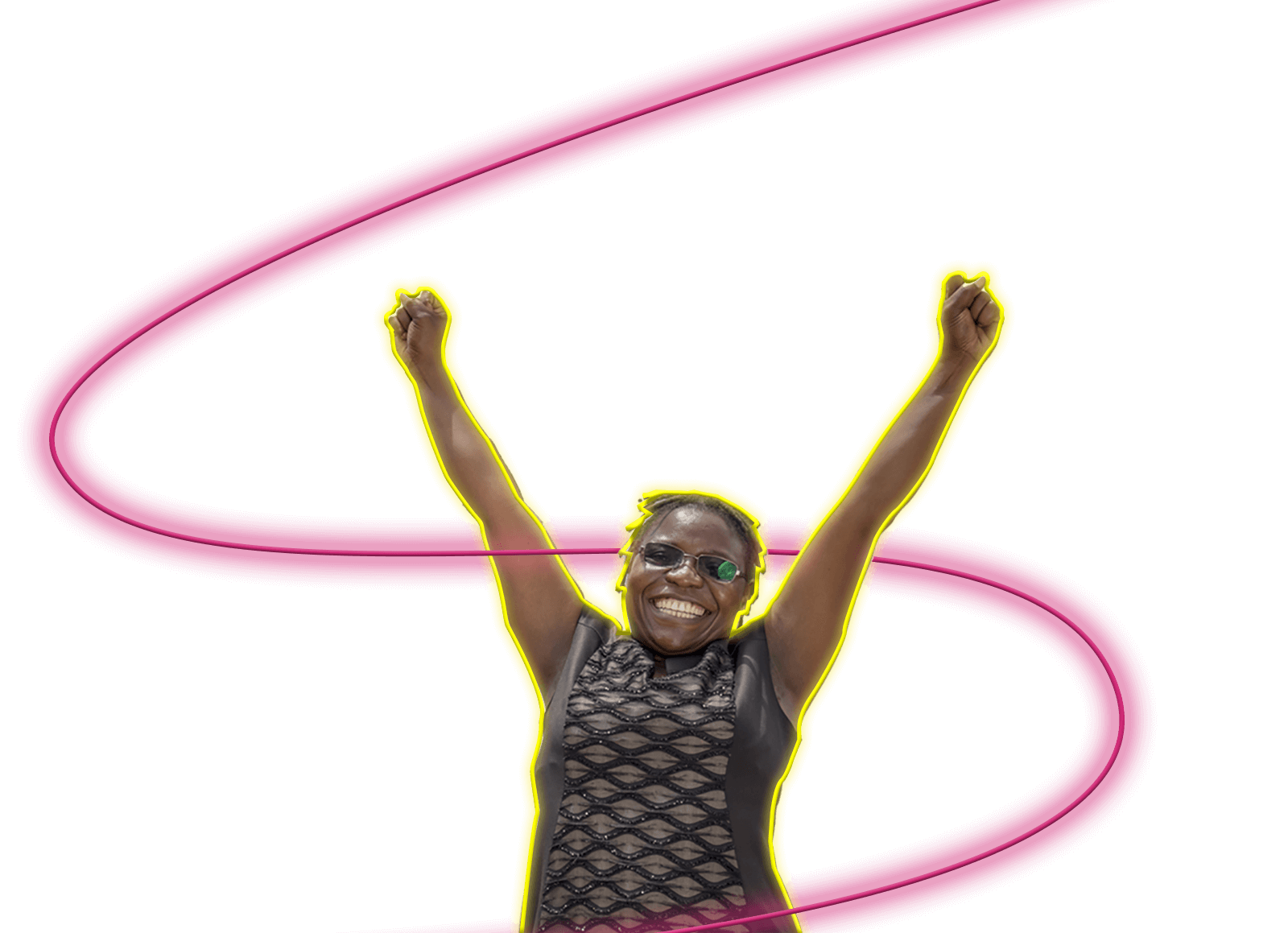
“I believe Beijing+25 can be a vehicle to build the feminist future I want to see, by unifying the voices of all women and standing together in solidarity no matter where we come from, live or work, regardless the colour of our skin or social status, disability or otherwise.”
“I have seen firsthand the impact women can have when we come together to change communities in Zimbabwe. I remember very well women demonstrating at 4th street bus terminus to call for the end of harassment so that women wearing miniskirts are not harassed by touts. These demos made headlines and amplified women’s voices.
I work specifically with women with disabilities. More often than not they do not experience the same rights as others because our society still believes women with disabilities have no need to make choices. Because of this, women with disabilities suffer a lot of discrimination and even experience more gender-based violence, particularly because most of them depend on their abusers for a living.
“Thinking about all the discrimination women with disabilities face makes me feel really sad and broken at times, but the fighting spirit in me won’t let me rest.”
This fighting spirit has been with me ever since I can remember. Growing up my father would say “I wish you were born a boy. You have the right spirit. It is a pity that you are just a girl. Girls do not go far in life.” My young mind could just not understand why I have to be a boy to go far in life. It was only years later when I came to realise the importance given to boys.
At school I saw how deaf girls were treated and the things they experienced, especially because of the lack of information. When I was an undergraduate student at the University of Zimbabwe I was the only deaf student at the whole university. It was there that I experienced discrimination simply because I was deaf. My lecturer doubted my capability and made his bias clear in front of the whole class. It was a real turning point for me, I vowed to myself that I would work hard, pass his class and one day I would change all of this and make life better for the next generation of girls with disabilities. At first I felt very angry because of the stigma attached to disability but then I realised some people simply need to be taught to respect women with disabilities. That is when I learnt to advocate for myself and all those whose voices are not listened to.
Since then, I have worked to bring change for women with disabilities in Zimbabwe through advocacy and lobbying for policies that are disability friendly to women and girls with disabilities. For example, with other activists, I have advocated for the implementation of the UN Convention on the Rights of People with Disabilities, a UN convention that guarantees the rights of a person with disabilities. I have also advocated for the inclusion of sign language as one of the official language of Zimbabwe. It is now stated in the national Constitution. I continue to support women with disabilities to participate fully in their communities. Through initiatives such as advocating for disability friendly polling stations and developing greater understanding of their right to vote, women with disabilities are able to make choices about their community’s social, political and economic spheres.
I believe it is important to link the disability movement with the women’s movement. My role is to sensitise the women`s movement on why it is necessary to create an inclusive environment and ensure that the needs of women and girls with disabilities are taken into consideration. I bridge the gap between women with disability and the feminist movement.
Over the past 25 years I feel we have achieved positive change but I feel we still fall short of what we could achieve. We have very good laws that are not being implemented and I feel this is not right. I feel disappointed. I hope Beijing+25 will bring real political and economic change and alleviate the problems being faced by women.
I hope that by empowering women with disabilities to stand up for themselves and teaching them about their rights, we can work together for the benefit of all.”